

Stock Name:JADARD
Stock Code :688252
















- 繁體中文
- 中文
- English
Reduce and offset the negative environmental impacts of business operations. Embed carbon reduction, energyefficiency, pollution prevention, and biodiversity protection throughout the entire product life cycle. Fulfill environmental responsibilities through sustainable sourcing, product design, and green office practices. Lead byexample and collaborate with the supply chain to promote green and sustainable development, contributing to therealization of dual carbon goals (30‧60 goals).
|
Key Issues of Sustainable Development(Achieved ✔) |
Short-Term Goals (2025~2026)
|
Medium-Term Goals (2027~2028) |
Long-Term Goals (2029~2030) |
|
Supply Chain Management |
|
|
|
|
Green Product |
|
|
|
|
Energy and Climate Change |
|
|
|
|
Green Office and Biodiversity Protection |
|
|
|
Supplier Profile
In 2025, JADARD engaged with a total of 210 suppliers, including 159 general procurement suppliers and 51 production-related procurement suppliers. Local procurement in the Chinese Mainland accounted for 92.91% of total procurement spending, reflecting the Company's commitment to promoting local economic development and effectively reducing carbon emissions generated during transportation.


Responsible Mineral Sourcing
JADARD attaches great importance to the fundamental human rights of all stakeholders and has established its Human Rights, Diversity and Equality Policy and Conflict-Free Minerals Policy. JADARD has also published its Conflict-Free Minerals Declaration and Conflict Minerals Policy. To better understand suppliers' responsible sourcing practices, the Company requires all suppliers to comply with the JADARD Sustainable Supplier Code of Conduct and sign the Sustainable Supplier Commitment Letter.

Greenhouse Gas Emissions and Energy Management
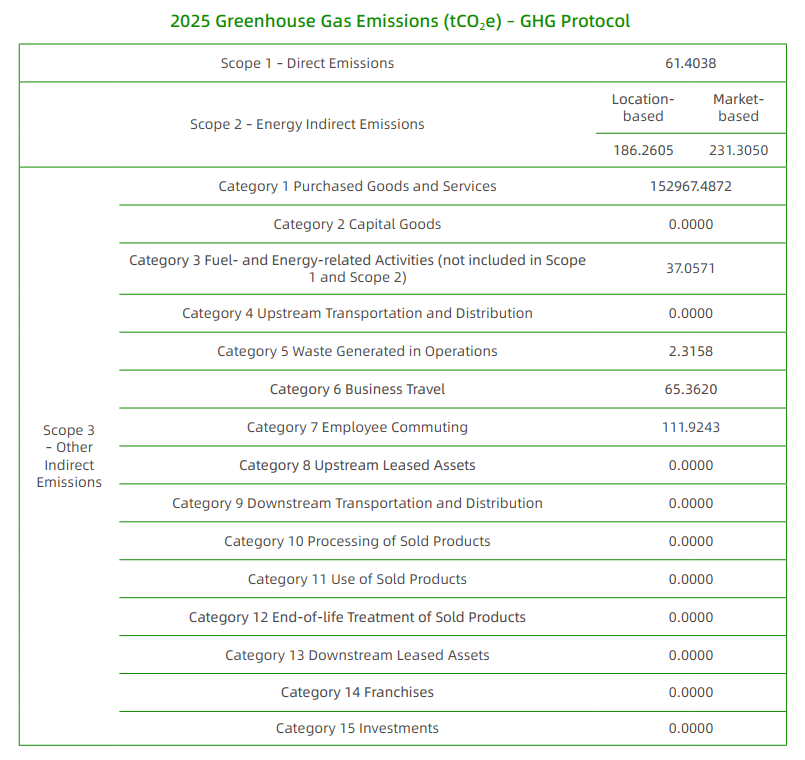
To effectively manage JADARD's greenhouse gas inventory activities, the Company has established the Greenhouse Gas Inventory Management Procedures. All operational activities related to greenhouse gas emissions inventory, data collection, emissions calculation, emissions inventory lists, inventory report preparation, and verification activities are conducted in accordance with these procedures. In 2025, in accordance with the ISO 14064-1 greenhouse gas inventory standard, JADARD completed its first greenhouse gas inventory and assessment (covering Categories 3 to 6, i.e., Scope 3). The inventory boundary covered all operating sites. Additionally, the Company conducted third-party data assurance for the first time to ensure the accuracy and transparency of the inventory results.

Waste Management
As a company operating under a fabless business model, JADARD does not generate industrial waste. The vast majority of waste generated comes from domestic waste produced in office premises, which is classified and collected by local sanitation authorities for centralized disposal. For extremely small quantities of hazardous waste, such as
batteries, lamps, and toner cartridges, the Company entrusts qualified third-party service providers for proper disposal. JADARD and its subsidiaries strictly comply with the Solid Waste Pollution Prevention and Control Law of the People's Republic of China and other relevant laws and regulations governing waste disposal, ensuring that 100% of all waste is disposed of in compliance with applicable requirements. In 2025, the total amount of waste generated was 7.95 tons, and the waste generation intensity was 0.0363 kg per RMB 10,000 of revenue.

Water Management
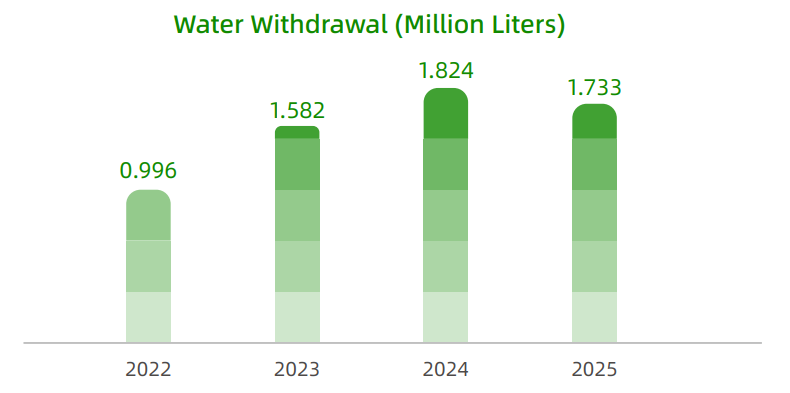
JADARD does not generate industrial wastewater. Wastewater mainly consists of domestic sewage generated from office operations, which is discharged into municipal sewage pipeline networks. In 2025, total water withdrawal amounted to 1.733 million liters, and water intensity was 0.0079 cubic meters per RMB 10,000 of revenue.

Together, build the future!